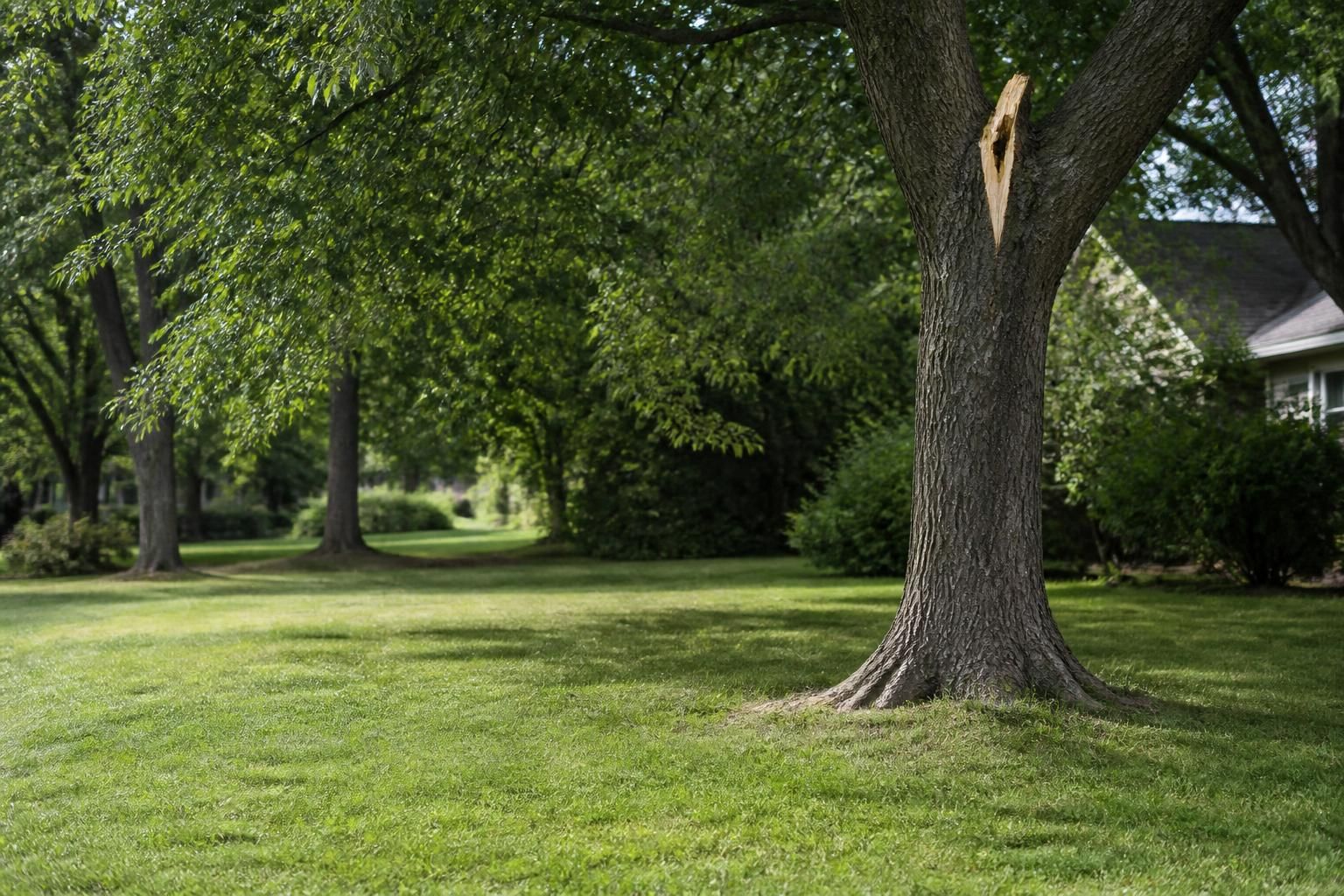
A heavy branch hanging low, cracked near the trunk, or pressed against a roof needs attention fast. Even when it has not fallen yet, a damaged limb can shift without warning and leave a driveway, yard, or entry path blocked.
Emergency Tree Removal Rock Hill helps homeowners across Rock Hill, SC handle hazardous branch situations with a clear plan and careful removal. If a limb is split, caught on another tree, or resting where it should not, we look at the tree, the access around it, and the risk below before starting work.
Some branches can wait for a routine trim. Others cannot. A branch may need immediate removal when it is already broken, leaning over a roof, touching a power line area, or sitting at an angle that keeps changing after wind or rain. These situations can move from risky to worse without much warning.
Emergency Tree Removal Rock Hill handles branch removal when the problem is too unstable for a simple wait-and-see approach. Homeowners call us after a limb splits from a trunk, drops onto another section of the tree, or hangs over a place where people walk, park, or gather.
Before any cutting begins, we review the branch and the tree around it. A damaged limb does not always tell the full story. The trunk, nearby branches, lean, access points, and space below the tree all affect the safest removal plan.
We also look at where the branch may move while it is being cut. A limb that appears simple from the ground can be stressed by nearby weight, snagged by another branch, or set over a tight area that changes the removal order. That is why planning matters as much as cutting.
Branch removal is not one-size-fits-all. Some limbs can be cut back in sections. Others need to be reduced from the outer end toward the trunk. A branch that is split and unstable may need a more controlled approach than one that is simply broken but still supported.
We choose the method based on the tree, the location, and the risk around it. The goal is to remove the problem branch without adding strain to the remaining tree or creating new damage below.
Strong weather can leave branches cracked, twisted, or partially detached. Some branches fail right away. Others look stable at first and start dropping bark, shifting position, or sagging more as the tree settles. That is why damaged limbs after rough weather deserve close attention.
Our storm damage tree removal work often includes emergency branch removal, fallen tree removal, and storm damage cleanup when the tree leaves debris behind. If the limb is still attached, we treat it as a live hazard until it is removed or fully secured by the right cutting sequence.
When we arrive, we focus on the branch, the tree, and the space around it. A careful branch removal visit is about more than making a cut. It also includes clearing the working area, deciding how the limb will come down, and removing the debris once the hazard is addressed.
Emergency Tree Removal Rock Hill serves Rock Hill, SC, along with nearby communities such as Fort Mill, Tega Cay, Lake Wylie, York, Clover, Pineville, India Hook, Newport, Baxter Village, Riverview, and Indian Land. Homeowners reach out when a branch is too unstable to ignore and needs a straightforward plan.
A damaged branch can become heavier as it holds water, collect wind, or sag onto something below. It may also continue to split from the break point, which makes the next movement harder to predict. Waiting often narrows the safe options for removal.
Fast action also helps limit secondary damage. A branch that falls from a roof line can damage gutters, siding, or nearby plantings. A limb across a driveway can block vehicles and create another hazard while people try to move it without the right plan.
Once the branch is out of the way, we review the remaining tree for any follow-up concerns. Some trees only need the damaged limb removed. Others may need trimming to reduce stress on nearby growth or additional work if the branch failure left more broken wood behind.
If the removed branch came from a larger tree with additional weak limbs, we can discuss the next practical step. That may include tree trimming, hazard reduction, or larger tree removal if the overall condition calls for it.
A branch is unsafe when it is split, hanging, rubbing against something important, or changing position after weather. If it looks like it could fall or tear farther, it should be checked before someone walks or parks nearby.
Only if it is stable and away from people, property, and access routes. A branch that is already cracked or hanging often shifts without warning, so it is usually safer to have it reviewed quickly.
Yes. Large tree removal can involve branch removal first, especially when the limb is the main hazard and the rest of the tree still needs careful evaluation. The size of the tree changes the removal plan, not the need to address the danger.
That situation needs a controlled approach because the branch may be supported by more than one point. We assess how it is hanging, what is carrying its weight, and how to reduce movement before making cuts.
Yes. Branch removal is often part of storm damage cleanup when limbs are broken, dangling, or scattered across the yard. Clearing the branch first helps open the area and reduces the chance of additional damage.
You can call +18036303160 or email contact@emergencytreeremovalrockhill.com to request a free estimate. Emergency Tree Removal Rock Hill can review the branch situation, discuss the work needed, and help you decide the next step for your Rock Hill, SC property.
If a branch is hanging, split, or blocking part of your property, do not wait for it to come down on its own. Contact Emergency Tree Removal Rock Hill for branch removal, fallen tree removal, hazardous tree removal, tree trimming, emergency branch removal, stump grinding, storm damage cleanup, or large tree removal across Rock Hill, SC and nearby service areas.
We keep the process straightforward: review the hazard, explain the plan, remove the problem branch, and clear the site. That is the practical way to get your property back to normal without guesswork.
Get Started
Share what is happening with the tree, where it is located on the property, and whether the situation is urgent. We will review the details and help you understand the safest next step.